

What CROs Need to Know About Phone-First Prospecting in 2026
Cold calling in 2026 is precision, not volume. The 90-Second Framework extracts buyer reality faster than 200 automated sequences. Here’s the system.

Here’s the thing.
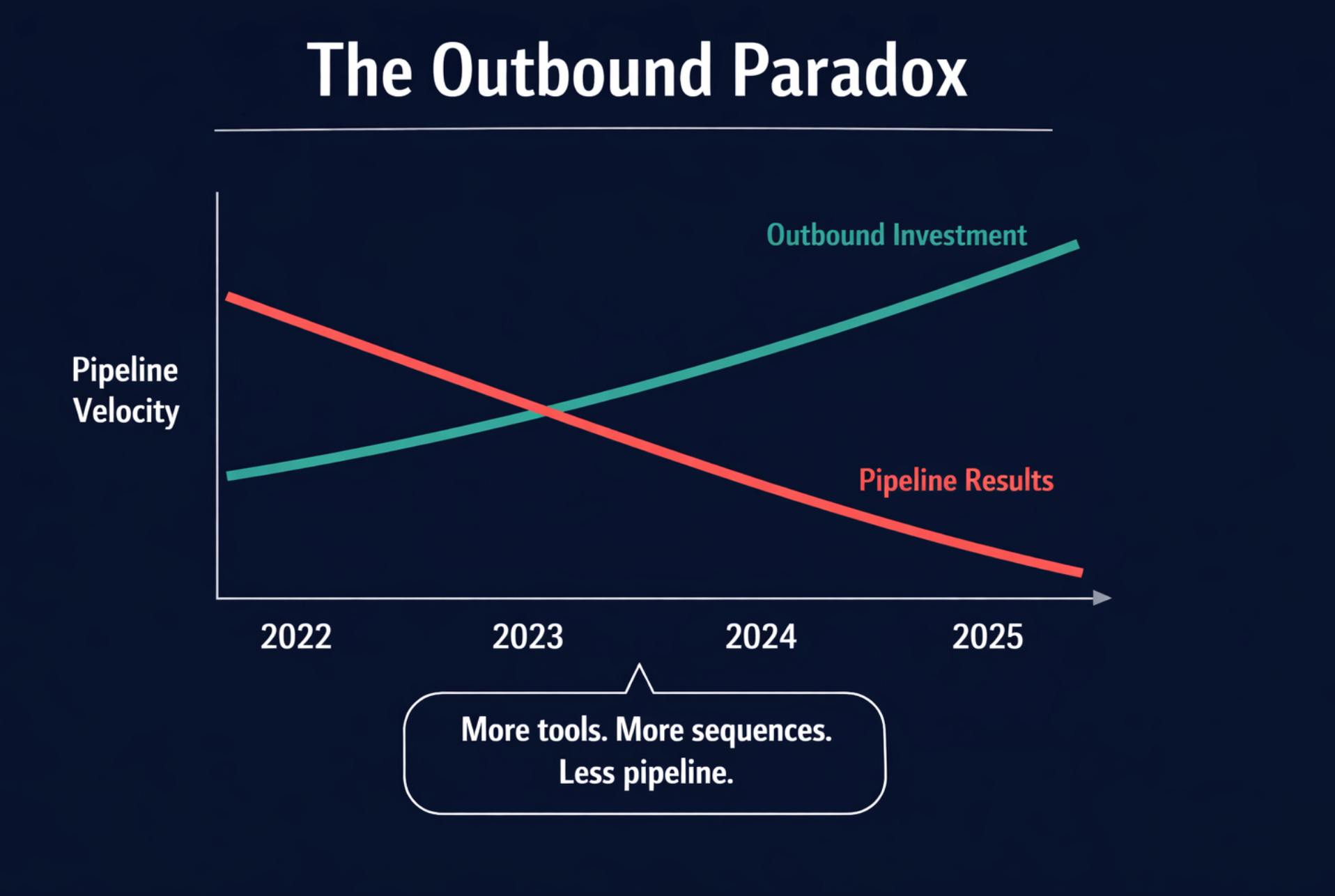
Every enterprise sales org increased their outbound investment in 2024.
They subscribed to more tools.
They started sending more sequences.
They went all-in on personalization.
They started getting more intent data.
But pipeline velocity declined anyway.
We tested this with multiple revenue teams. We observed and evaluated their existing processes. The problem is non-relevant signal overload.
Between automated “personalization” and endless LinkedIn DMs, buyers have officially tuned out. The digital channels we used to scale outbound are broken.
But there’s one channel still producing results: The Phone.
In 2026, cold calling is the ultimate competitive advantage. Why?
Because you can’t automate genuine effort.
A live conversation conveys immediate trust and relevance. It shows the buyer that you actually took the time to understand their specific challenges and called to solve them.
In this issue:
The 90-Second Truth Framework
Signal-to-Call Playbook (with real company examples)
What Bad Looks Like (avoid these mistakes)
Call Prep Prompts (steal these)
Your 5-Day Action Plan
The 90-Second Truth Framework
A cold call is not a pitch. It’s a diagnostic.
The goal isn’t booking a meeting.
The goal is extracting truth. Sometimes that truth leads to a meeting. Often it leads to a fast disqualification… which is equally valuable.
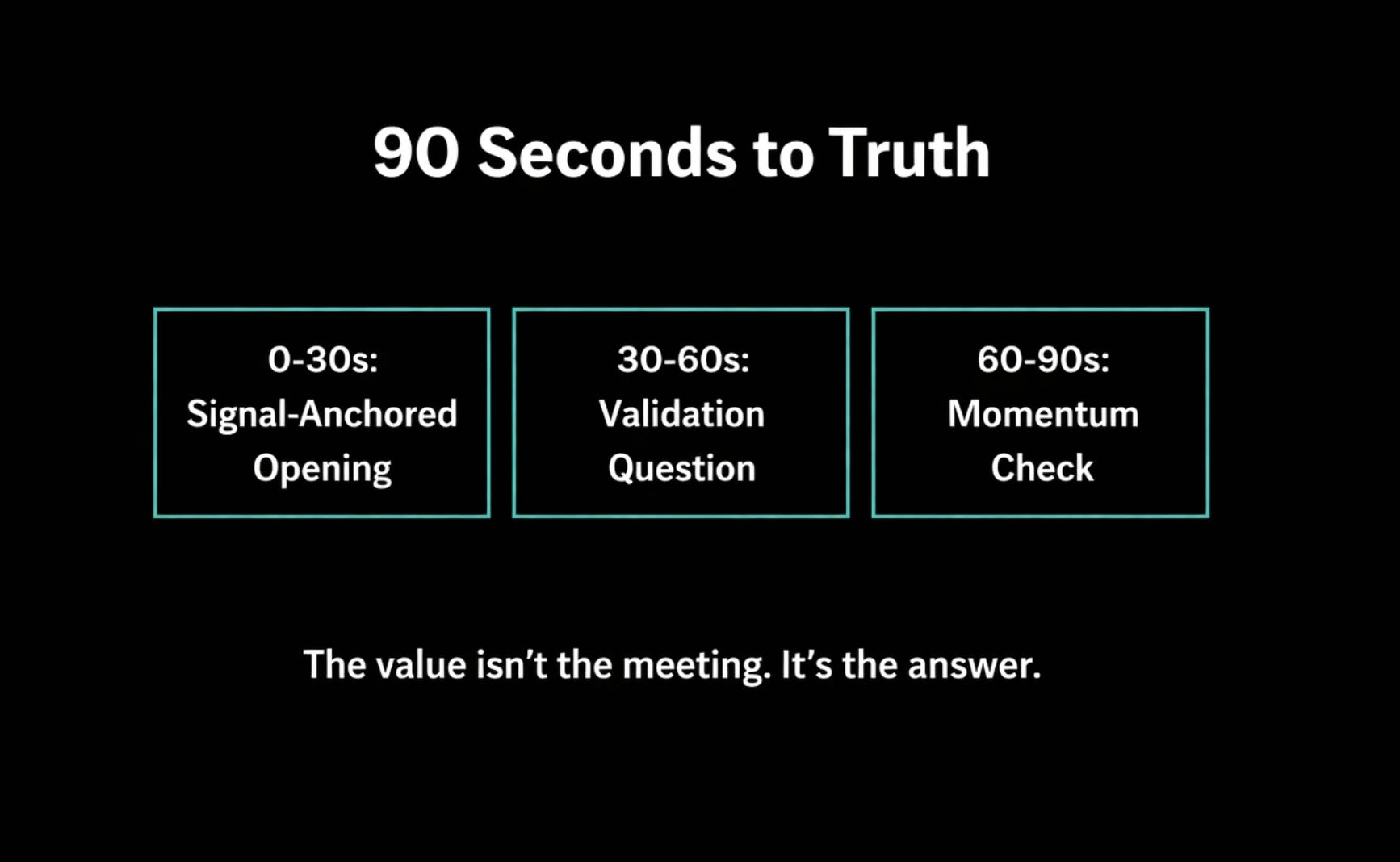
Here’s the structure we use:
First 30 Seconds: Signal-Anchored Opening
Look at this opener - “I noticed changes at your company”.
It’s too vague and signals that you didn’t actually research.
Instead this opener:
“Your COO mentioned moving transformation projects from pilot to production in last month’s earnings call. Companies at that stage usually hit a deployment bottleneck.”
This does two things: proves you did real research, and positions you as someone who understands their situation.
Next 30 Seconds: The Validation Question
Not discovery. Validation. One question that reveals timing.
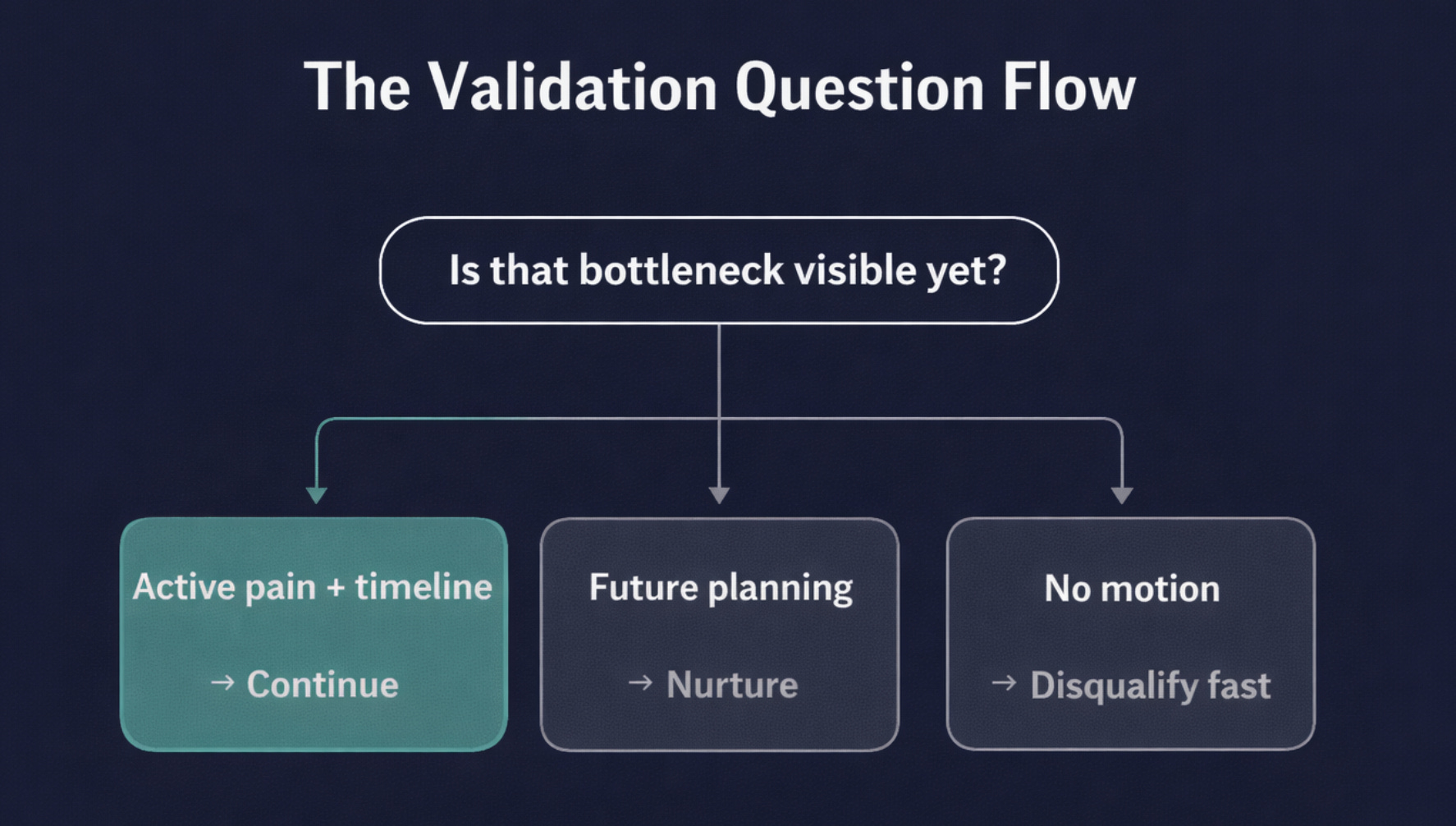
“Is that bottleneck visible yet, or still theoretical?”
“Are you in assessment mode or already making changes?”
The answer tells you everything.
Active pain with timeline = continue
Future planning = nurture
No motion = disqualify fast
Final 30 Seconds: The Momentum Check
Only if the validation question revealed active motion:
“When does this need to be solved by?”
“Who else is involved in figuring this out?”
The call ends when you have the truth. Sometimes that’s 90 seconds. Sometimes it’s 3 minutes.
You’re not pushing for a meeting… you’re extracting signal.
The value of a call isn’t the meeting. It’s the answer.
Signal-to-Call Playbook: Real Examples
Different strategic initiatives require different approaches.
Here’s what actually works as per real company examples.
Signal: Workforce Restructuring + Hiring Surge
Example: Fastly announced workforce restructuring (press release + 10-K filing) with 107 open positions (30+ in SDR/AE roles).
Strategic pain: Pipeline coverage risk. New hires need 60-90 day ramp. Existing pipeline at risk during transition. Each unfilled SDR week costs $50-100k in lost pipeline generation.
Opening:
“107 open roles during restructure means rebuilding while running. That’s usually a coverage gap. Every week without full SDR capacity costs $50-100k in lost pipeline.”
Validation question: “How are you protecting pipeline during the transition?”
Why it works: Restructuring + aggressive hiring = they’re already feeling the pain. The question surfaces whether they’ve solved it or it’s still a problem.
Signal: Account-Centric Motion Shift
Example: Zscaler’s CEO mentioned “shifting to account-centric sales motion” in Q3 earnings call. VP RevOps + 5 analyst hires on LinkedIn. Enablement overhaul mentioned in investor presentation.
Strategic pain: Scoring model misalignment. Legacy lead scoring optimized for volume, not depth. Transactional model doesn’t support strategic selling. Need to operationalize account-centric signals.
Opening:
“Followed your account-centric motion shift from Q3 earnings. Motion shifts usually fail when scoring stays stuck. Legacy models are optimized for volume, but account-centric needs depth.”
Validation question: “Has your scoring model caught up with the motion change, or is that still a gap?”
Why it works: CRO hire or GTM motion shift creates a 90-day reset window - a prime vendor evaluation period. Companies shifting to account-centric models see 2x reply rates when outreach references the strategic initiative.
Signal: Customer Satisfaction Crisis + AI Initiative
Example: Astound Broadband has 1.6/5 customer service rating with only 17% issue resolution rate. Published strategic white paper on AI in customer service 127 days ago.
Strategic pain: Executive-level urgency. Board visibility on CSAT crisis. Already committed to AI strategy (white paper proves it). New Head of CX hire has 90-day mandate to show results.
Opening:
“Your AI customer service white paper outlined the transformation needed. With a 1.6/5 rating and 17% resolution rate, that’s not a future initiative — that’s a current crisis with board visibility.”
Validation question: “Are you still in vendor evaluation, or has the urgency moved you into active implementation?”
Why it works: CSAT crisis + published AI strategy = they’ve already committed to solving this. The question validates timing. This signal stack scores 98/100 on UrgencyIQ — top 2% priority.
Signal: Post-Merger Integration + Hiring Surge
Example: Marvell announced AWS partnership with 120 new hires planned (earnings call). AI/ML engineering cluster (40+ roles) on LinkedIn. GTM expansion across 3 new regions.
Strategic pain: GTM coverage during rapid scale. Need to ramp sellers on new product positioning. Maintain pipeline velocity while integrating partnership messaging.
Opening:
“Scaling 120 hires for the AWS partnership while expanding into 3 new regions — that’s a coverage problem. Ramp velocity usually breaks when you’re integrating new messaging and new markets simultaneously.”
Validation question: “Is the partnership messaging integrated into your ramp program yet, or is that still catching up?”
Why it works: Partnership + hiring surge = expansion under pressure. This combination drove 35% higher meeting quality and partnership narrative adoption within 2 weeks.
What Bad Looks Like
Most cold calls fail in the first 15 seconds. Here’s why:
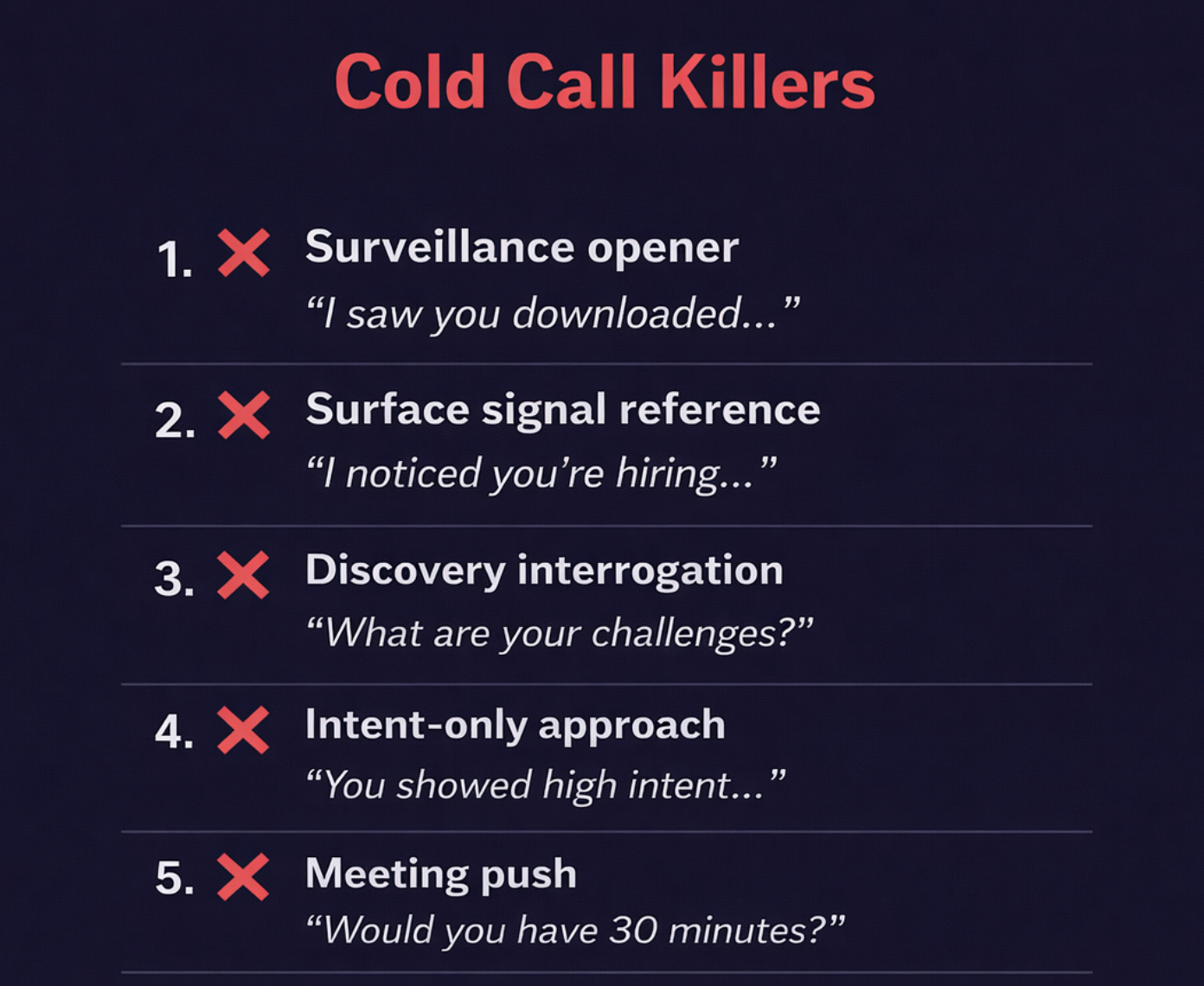
The surveillance opener
“I saw you downloaded our whitepaper...”
Feels like tracking, not insight. They downloaded something. So what? That’s not strategic pain… that’s behavioral data without context.
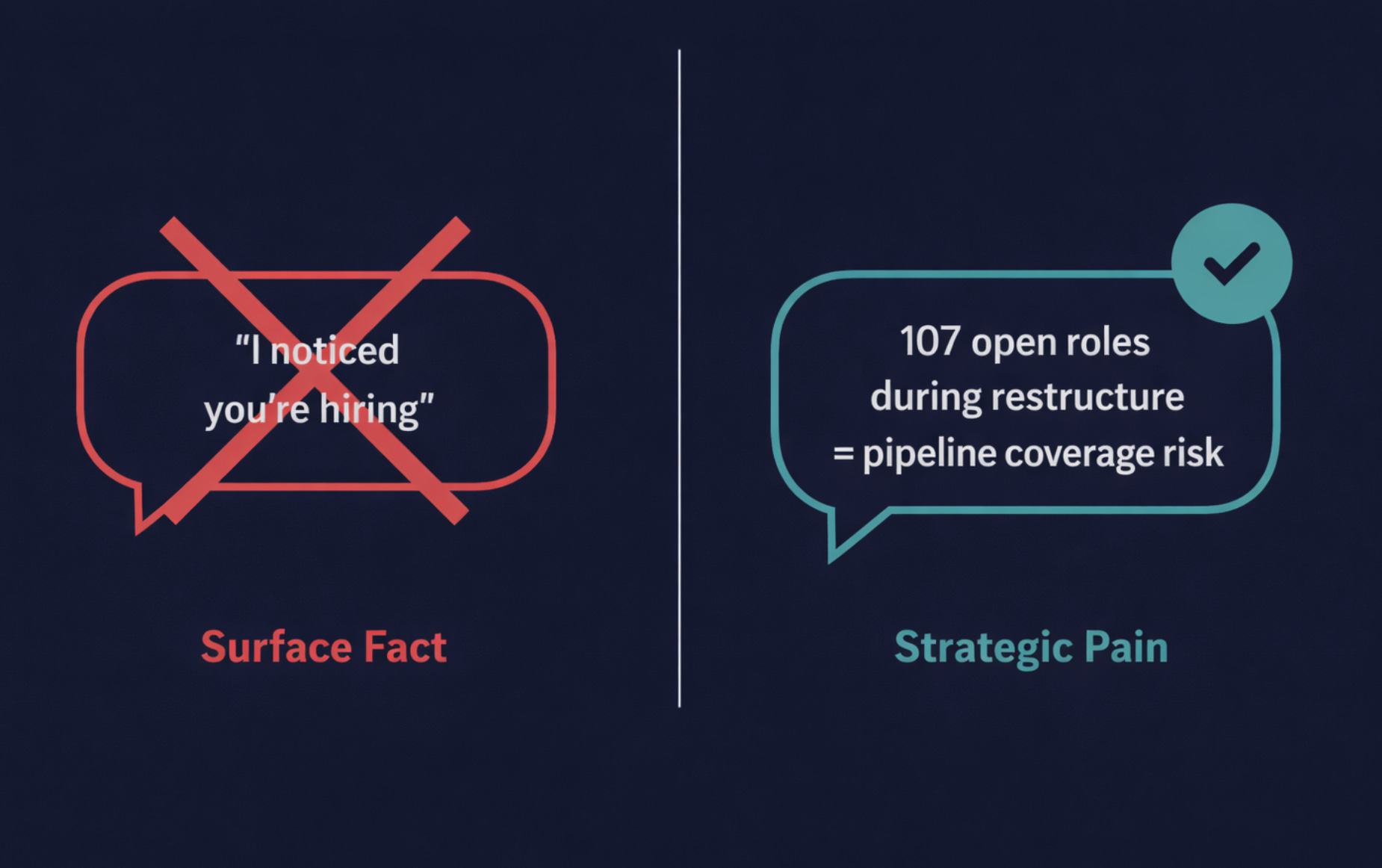
The surface signal reference
“I noticed you’re hiring...”
Hiring is a fact. “107 open roles during restructure means pipeline coverage risk” is strategic pain. One opens conversations. One gets ignored.
The discovery interrogation
“What are your biggest challenges right now?”
Opening with discovery burns trust. You should already know their likely pain based on strategic signals.
The intent-only approach
“Your company showed high intent on our platform...”
Intent without strategic context is noise. A junior employee researching for an internal presentation looks identical to a procurement team building a vendor shortlist.
Strategic initiatives tell you why they’d buy. Intent tells you someone clicked something.
The meeting push
“Would you have 30 minutes this week to discuss?”
Asking for time before establishing relevance. Signals you’re running an activity quota, not having a real conversation.
Call Prep Prompts (Steal These)
We use these internally. Copy them.
Prompt 1: Strategic Pain Extraction
Use before calling an account with detected signals.
Based on [company]’s recent [earnings call / 10-K / press release], extract:

1. The strategic initiative (not just the fact)
   - Fact: ‘They hired 5 sales reps’
   - Initiative: ‘Scaling capacity while maintaining forecast accuracy’

2. The executive who owns it and their likely mandate

3. The internal pain this creates (coverage risk, integration complexity, compliance deadline)

4. The urgency window (30-90 days for restructuring, 60-90 for new leader, etc.)

Output a 2-sentence opening that references strategic pain, not surface facts.
Prompt 2: Signal Stack Analysis
Use when multiple signals detected on same account.
For [company] with these signals:
- [Signal 1: e.g., Workforce restructuring announced]
- [Signal 2: e.g., 100+ open positions]
- [Signal 3: e.g., New VP RevOps hire]

Analyze:
1. Do these signals reinforce each other causally? (Restructuring + hiring = coverage risk)
2. What’s the combined urgency window?
3. What single validation question would confirm all three signals are active?
4. Priority score: A+ (90-100), A (80-89), B (65-79), C (40-64)?
Prompt 3: Post-Call Classification
Use after every call to classify the account.
Given these call notes: [paste notes]

Classify:

1. Motion status: Active evaluation / Future planning / No motion
2. Strategic initiative confirmed? Which one?
3. Blocker identified: Budget / Timing / Incumbent / Political / None
4. Urgency window: 30 days / 60 days / 90 days / 180+ days
5. Action: Pursue (AE handoff) / Nurture / Disqualify
6. If disqualify: What signal would indicate re-engagement?
Why This Matters More in 2026
This dynamic accelerates next year. Three reasons:
AI agents flood inboxes. Every company with a CRM and an API key can now send personalized sequences at scale.
Buyers assume automation by default. Any written outreach is assumed machine-generated until proven otherwise. Even genuinely personal emails get classified as synthetic.
Live interaction becomes scarce. As async becomes automated, real-time human interaction becomes rare. Scarcity restores signal value.
What can’t be automated regains leverage.
What To Do This Week
Stop reading. Start testing.
Day 1-2: Build Your List
Pull 10 accounts with strategic signals in last 30 days. Look for:
Workforce restructuring + hiring surge (Fastly pattern)
GTM motion shift mentioned in earnings call (Zscaler pattern)
CSAT crisis + AI/CX initiative (Astound pattern)
Partnership + expansion hiring (Marvell pattern)
New CRO/CISO hire within 60 days
Spend 10 minutes per account. Map: Strategic initiative → Internal pain → Validation question.
Day 3: Make 10 Calls
Use the 90-Second Truth Framework. Don’t push for meetings - extract truth.
Track three things:
Connect rate (how many picked up)
Truth discovered (active eval, future planning, or no motion)
Disqualification speed (how fast you knew to move on)
Day 4-5: Analyze and Adjust
Review what you learned:
Which strategic initiatives actually correlated with active evaluation?
Which pain framings opened conversations vs. got hung up on?
Which validation questions revealed the most useful information?
Adjust your signal criteria. Do it again next week.
After 10 calls, you’ll know more about your market than 200 sequences would teach you.
The Reframe
Cold calling is not a volume play. Volume belongs to async. The phone is for precision.
Cold calling is not a legacy tactic. It’s the one channel AI hasn’t commoditized.
Cold calling is not a replacement for other channels. It’s the calibration layer that makes other channels work.
When your signal engine detects an account at 88/100 UrgencyIQ based on restructuring + hiring surge + earnings call mentions, a call proves or disproves it.
You calibrate the signal against reality.
Cold calling doesn’t scale. That’s why it works.
The question for your outbound motion isn’t “how many calls are we making?”
It’s “what truth are we learning… and how fast?”
This newsletter is part of “Future of Prospecting.” Subscribe for weekly frameworks that close the AI execution gap.
The signal detection layer we referenced — that’s UrgencyIQ.
The pain-persona-proof structure — that’s the 3P Framework. Both at revenoid.com.
Want to Know about our specialized AI Agents, Reasoning Engine and Frameworks (“UrgencyIQ” and “3P Framework”) for enhancing cold calling outcomes? Book a meeting on the button below.
If you’re not a subscriber, here’s what you missed earlier:
The 5 Internal Buying Motions That Never Show Up in Intent Tools
The 7 Signals That Accelerate Pipeline Velocity - And the 2 That Waste Everyone’s Time
LinkedIn Comment Frameworks & Prompt Systems for Sales Teams
Subscribe to get access to our weekly posts on Prospecting, Automation, AI, Revenue Growth and Lead Generation.